
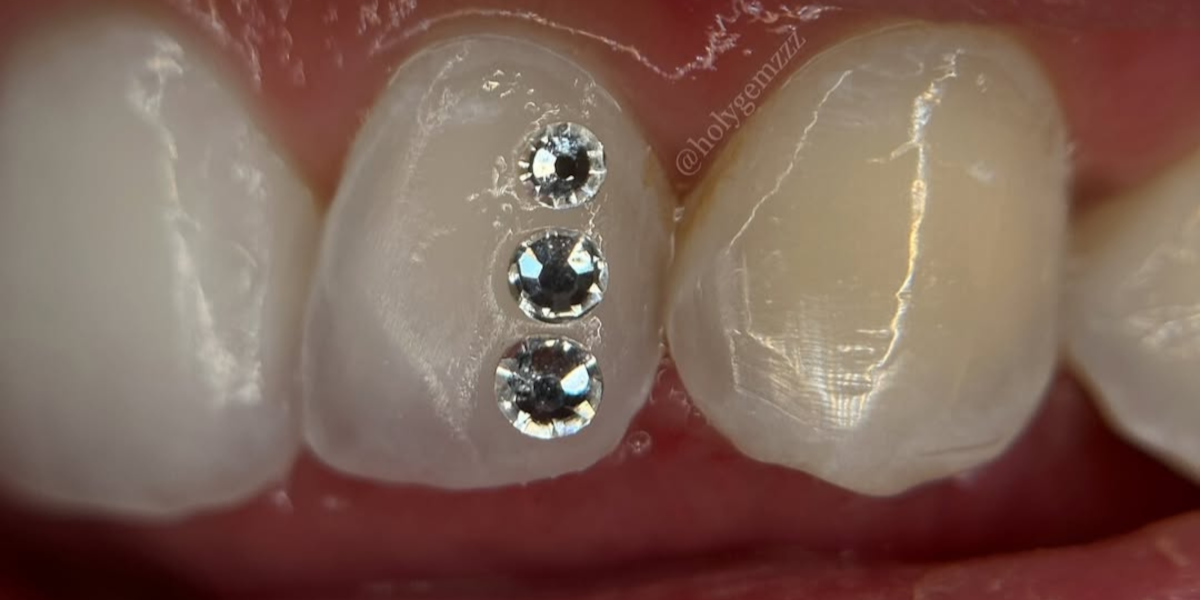
A tooth gem can be a subtle detail or a piece that stands out whenever you smile. If you are thinking about getting one, you probably want to know how it is applied, how long it might last and what care it needs.
In this guide to tooth gems in Madrid, we go through those questions without assuming you already have tattoos or piercings. Before the design, what matters is understanding the procedure and assessing whether it is suitable for your mouth.
Table of Contents
What tooth gems are and which options are available
They are small pieces attached to the tooth’s surface with an adhesive. They are not the same as a piercing, which passes through tissue, although the term “tooth piercing” is sometimes used informally.
You will find crystals, metal pieces and different shapes and colours. Sparkle or a “premium” label is not enough: ask what the piece is made from and whether the material is suitable for that use.
- Crystals: let you compare sizes and colours for a subtle or more noticeable effect.
- Metal pieces: can come in shapes such as stars or initials. It is worth knowing their composition, not just how they look.
- Other finishes: availability depends on the service. Ask about the specific piece before choosing.
How they are applied
The bonding technique aims to attach the jewellery without drilling the tooth. Even so, preparing the surface and removing the gem can affect enamel: it should not be presented as a risk-free procedure.
- Initial assessment: discussing the condition of the tooth, any discomfort and any dental work you have.
- Choosing the piece: comparing size and position before application.
- Preparation: cleaning and isolating the area according to the technique being used.
- Bonding: attaching the piece with suitable products and, where appropriate, curing the material with a lamp.
- Check and guidance: explaining how to care for the area and what to do if there is discomfort or the gem moves.
Ask for these steps to be explained before you begin. If you have questions about your oral health, consult your dentist.
How long they last and how to care for them
No single lifespan can be guaranteed for everyone. The bond, the piece, the tooth and daily habits all play a part. Ask for an estimated duration for the specific service and what happens if the gem comes off sooner than expected.
Keep up your oral hygiene, clean carefully around the gem and follow the advice on eating and aftercare following application. Do not play with it or try to glue it back on at home.
Three questions worth clearing up
- Can it affect enamel? Yes, there can be risks. It is not correct to claim that the adhesive protects the tooth or that it will remain intact in every case.
- Can it cause discomfort? You should not be promised that you will feel nothing. If pain or new sensitivity occurs, seek a dental assessment.
- Can it be removed? The gem and adhesive should be removed by an appropriately qualified professional, not by pulling at the jewellery or using tools at home.
Why to avoid household adhesives
Household glue, nail glue and other products not intended for this use are not an alternative. They can damage tissues and make removal harder. An online kit does not, on its own, tell you whether the procedure is suitable for you either.
The piece can come loose, and plaque can build up around it. That is why both attachment and cleaning afterwards matter. If you notice movement, pain or swelling, do not ignore it.
How to choose a design without rushing
You can start by comparing a single gem with an arrangement of several pieces. Look at references, think about how visible you want it to be and ask about the options available at Bon Vivant Tattoo Studio, on Calle Montera.
You do not need to choose the boldest option. What matters is that you like it, understand the aftercare and have had your questions answered before taking the next step.